Showing posts with label young professionals. Show all posts

Tuesday, November 11, 2014

Young Professionals Corner: A Guide to Managing Your Own Education

Editor's note: This is the latest in a series of guest posts from young VSCPA members dealing with topics of interest to young professionals. If you'd like to write or have a topic you'd like a future blogger to cover, please email VSCPA Academic & Career Development Coordinator Tracey Zink.

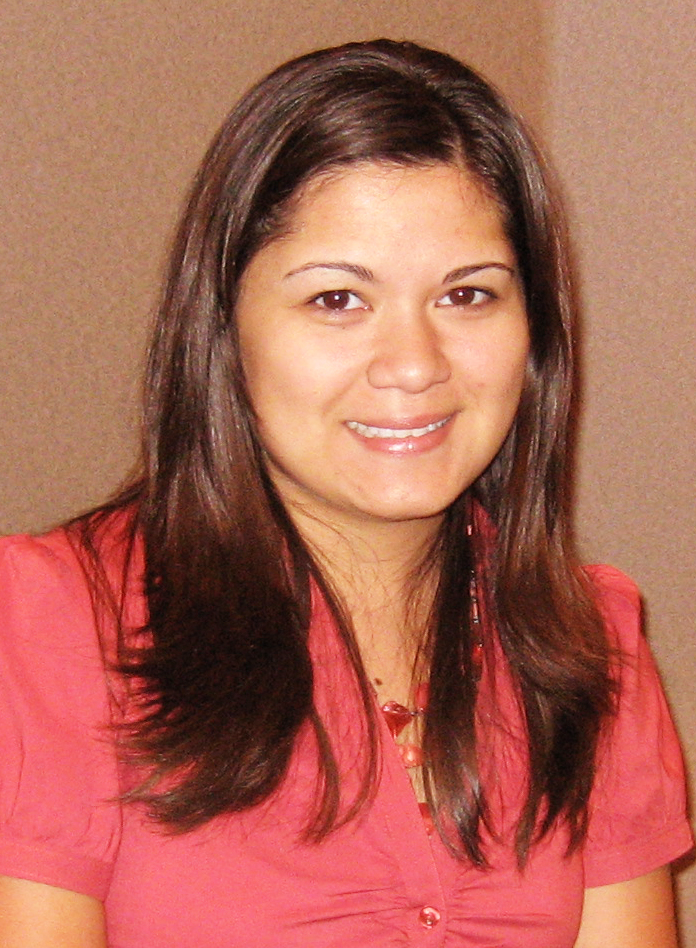
By Steven Valdez
Associate, KPMG

Time and time again we are told to manage our careers and drive down the next industry,
company, or position we are interested in.  The equally as important part of managing your life comes in the form of managing your own education. 
  • Make Your Self-Education A Priority: On the constant evolving list of priorities it is important to put your continuous education that you can’t be forced to do at work at the forefront.  Take this responsibility and really own it, because no one else can assign you better educational lessons of your interest than yourself.
  • Go For The Tiny Wins: Education doesn’t always have to come in the size of a 1,000 page book, 5 hour video series, or driving across the country to attend a conference.  The most effective way to educate yourself is through many tiny learning sessions over a period of time when you can squeeze it in to your demanding schedule.  Define generally what you would like to learn and begin to take the time to lay out various videos or articles.  Bookmark interesting articles or websites in your browser for quick access.
  • Block Off Time In Your Schedule: Make your learning time important enough to block off the time on your work calendar.  Take an extra 30 minutes at the end of a couple days out of the week to learn a few things of interest.  Over the course of a couple months you would have expanded your tool belt tremendously.
  • Constantly Reevaluate Your  Why: It will come as no surprise that desires and interests are ever changing.  Keeping that in mind, ensure that you spend some time reflecting every so often on the path you are traveling to see if you need to realign your self-education with dynamically changing interests.
Steven Valdez is an associate with KPMG in Richmond. In his spare time, he works with the VSCPA's Young Professionals Advisory Council, the Greater Richmond Chamber of Commerce Richmond Business Council and his alma mater, Longwood University.

Friday, October 10, 2014

Young Professionals Corner: Tips for Staying Positive at Work

Editor's note: This is the latest in a series of guest posts from young VSCPA members dealing with topics of interest to young professionals. If you'd like to write or have a topic you'd like a future blogger to cover, please email VSCPA Academic & Career Development Coordinator Tracey Zink.
     
By Shelly Verougstraete, CPA
Team Accountant, Joyner, Kirkham, Keel & Robertson, Richmond
It is easy to stay positive at work when things are going well but we have all had those days where nothing seems to go right. Even with long days (and sometime nights!) at the office, it can be hard to stay positive. With deadlines, endless phone calls, and emails, happiness can disappear. However, there are some ways to stay positive in the most difficult situations.
  1. Treat yourself – Go for the Venti latte. Grab a square of chocolate for an afternoon treat.
  2. Stay away from the Debbie Downers.  Stay away from the actively disengaged people at work. These are people that are negative about everything. They will bring you down and drain any enthusiasm you have left after a long day.
  3. Talk to your colleagues – Letting your struggles build up inside is a recipe for trouble. Sharing your issues with a co-worker can help ease your mind and who will receive beneficial encouragement from others.  You  might also find that a co-worker can help you out too!
  4. Challenge negative thoughts with positive ones - Negative thoughts can seem hard to avoid or erase.  Negativity is all about your mindset. Try to find the bright side of the situation.
  5. Smile! – Simply smiling, even when you are in a bad mood, can boost your happiness. Smile at a passing co-worker. Smile as you answer a client’s question. Smile even while you are by yourself. Check out this blog post on the science of smiling. (https://blog.bufferapp.com/the-science-of-smiling-a-guide-to-humans-most-powerful-gesture)
Smiling cannot only improve you attitude, but help you become more successful and possibly live longer. If that is not a reason to smile, I do not know what is!

Shelly Verougstraete, CPA, is a team accountant at Joyner, Kirkham, Keel & Robertson in Richmond. She is a graduate of Longwood University.

Tuesday, September 2, 2014

Young Professionals Corner: A More Efficient Outlook

Editor's note: This is the latest in a series of guest posts from young VSCPA members dealing with topics of interest to young professionals. If you'd like to write or have a topic you'd like a future blogger to cover, please email VSCPA Academic & Career Development Coordinator Tracey Zink.
  
By Steven Valdez
Corporate Audit Analyst, Federal Reserve Bank of Richmond
Every business professional uses email in the course of their day to day activities and can take up proportional amounts of time organizing and searching them. Today I would like to challenge how we look at and organize this major part of our professional lives.

A way to ensure that troves of new file directories aren’t being created haphazardly costing time and energy is to break it down into the six overarching broad categories. Most thought goes towards the expansion planning of email folders, but little thought is given to the contraction of those sub-folders when they can be deleted. Just like adding files to make something more effective, sometimes it is important to circle back and consolidate those sub-folders into the top-level ones. To aid in this, I use a 6-tier categorical approach that makes expanding and contracting folders easy and logical.
  • Top-Level Categories:
  • Education
  • Notifications
  • Opportunities
  • Social and Family
  • Training and HR
  • Work
Within the overarching folders the suggestion is to create hierarchies that make sense for the use of the sub-level. For categories like Training and HR it is easier to assume that subfolders won’t be necessary, but in the case of the Work folder it is different. As projects come into and out of scope over time it is important to create a flexible and easily navigable structure. As you work on one project you can create sub-folder for organizing info when in the weeds so to speak, but once the project is over it is easy to delete the subfolder and move the emails to the main project folder to be archived for future reference. The goal is to allow expansion and contractions as different priorities shift. Later on the entire Proj. Assignment I folder can be dragged anywhere without searching multiple folders.

Some of you may be familiar with the system generated emails that come in day in and day out for various things that may not always be relevant immediately. Similarly, but different to the Projects folder is the Notifications Folder helpful for automatically handling messages by using inbox rules. Inbox rules your key to having a computer secretary to handle your email or calendar requests. The advanced settings allow hundreds if not thousands of variations to prompt the exact actions you are looking for.

Steven Valdez is interning as a corporate accounting analyst at the Federal Reserve Bank of Richmond. He will join KPMG as an associate in October.

Thursday, June 26, 2014

Starting Salary for 2014 Accounting Grads: $52,900

According to the latest salary survey from the National Association of Colleges and Employers (NACE), the average starting salary for 2014 graduates with business majors (including accounting) has declined slightly to $52,900.

That figure is down 0.8 percent from $53,300 in 2013. Business majors as a group will see an average starting salary of $53,901, an 0.6 percent decease from 2013.

The data was published in the April 2014 NACE Salary Survey.

Across all disciplines, the average starting salary for a new graduate with a bachelor's degree is up 1.2 percent to $45.473.

Wednesday, March 19, 2014

Setting Yourself Apart From the Other 100 Accounting Students

Editor's note: This is the latest in a series of guest posts from young VSCPA members dealing with topics of interest to young professionals. If you'd like to write or have a topic you'd like a future blogger to cover, please email VSCPA Academic & Career Development Coordinator Tracey Zink.

By Alice Yeh
KPMG


Although the title of this blog indicates a mere 100 competitors that you have to be concerned about, I assure you that this figure is highly understated. Depending on your school, your accounting program most likely consists of more than 100 students, many of them eyeing the job you’re interviewing for. However, I have one piece of advice that will transform you into the diamond in the rough-compatibility through flexibility.

Most interviewers do not put your hard accounting skills to the test. On the contrary, they are there to inspect you as a person: your personality, your work ethic, but most of all, your compatibility with their company. However, the key is not to study your PowerPoints on federal taxation every night before you climb into bed. Being able to recite the Codification backwards will not help you handle a demanding manager or difficult teammate. You need to prove to employers that you are a well-rounded person.

The only way to make yourself a flexible person that can adapt to any environment is to invest your time in other areas besides academics. Put yourself out there and take up leadership positions. The only way to learn how to deal with a variety of personalities is to practice. What better way to hone your flexibility skills than through an organization that you are passionate about or a sport that you love. So make yourself irresistible for employers through your compatibility through flexibility.

Wednesday, February 26, 2014

Young Professionals Corner: 'The Perfect Manager'

Editor's note: This is the latest in a series of guest posts from young VSCPA members dealing with topics of interest to young professionals. If you'd like to write or have a topic you'd like a future blogger to cover, please email VSCPA Academic & Career Development Coordinator Tracey Zink.

By Marian Millikan, CPA
Manager, Cherry Bekaert LLP

2013 was an exciting year for me. It was the year I was promoted to manager at my firm. I look back to my journey almost six years ago realizing that I’ve learned and grown so much. What I also remember is what I told myself six years ago, what I promised myself I would never forget: how it felt to be a staff accountant.
I remember sitting at my desk with my first tax return project, terrified that I was going to mess everything up (and from what I remember, I did). My eight hours of work somehow didn’t save, my return blew up in front of my face as the software crashed and I was in tears. Over the next few years I figured things out, I learned the valuable lesson of periodically saving work and I became more confident in myself.
It was my second year of being a staff when I realized while learning how to prepare returns, maneuvering the software and communicating with clients, that I also had to learn to work with management. To be able to take direction, understand what was needed of me, and perform the job. There were many times in the beginning I missed the mark. I thought I understood the project, but it turns out I didn’t. To me, that was failure, and it was stressful.
I eventually figured out how to work with different styles of management. In ANY industry or field you will have different types of management, whether you are in public accounting, private industry or government. You will have your micromanagers who check in with you every hour on a project, and you will have your managers who give you a down-and-dirty rundown of what needs to be done, and your job is to provide them with the finished product in perfect form. You have those that have the urgent, last-minute projects all the time . You have those that spend the time to walk you through a project and spend the time to teach you the tricks of the trade. The types are endless. It was my second year as a staff I envisioned what the perfect manager was. It was actually pieces of each of these individuals. Fortunately I was around highly competent management, but they were all different in the styles they used to manage. What IS the perfect manager? From a staff's view, what would that look like?

It was then I made it my goal. I wanted to remember what those who I would be managing wanted from me. I wanted to remember myself six years ago. So when I was promoted, I asked. I asked staff what they wanted in a manager, and here are some things I heard.

Qualities of the “perfect” manager (a staff's perspective)

·    Be direct: Let us (staff) know how long a project will take, so if I’m going down the wrong path, I know to stop and ask for advice before spending hours doing the wrong work. You will not receive the work you wanted, and I will be frustrated I blew the budget. Break down the project in steps if possible and be direct in what your expectations are for each part. This will keep us on track and on budget.

·    Be approachable: Foster an environment where staff can feel comfortable asking questions. This doesn’t mean to let us take the easy way out, but be inviting, challenge us at times to research the issue and then sit down with us to go over the solution. We want to learn, and we won’t if we don’t feel comfortable reaching out to you.

·    Teach Uu: Investing time in your staff will breed confidence and better performance.  Use corrections as a learning experience, not as a way to point out failures. Instead of making a correction, show us the correction, and tell us why you are doing something a different way.

·    Give feedback: Spend as much effort giving positive feedback as constructive feedback. Find time to take your staff for a coffee or a quick lunch.  Let them know one-on-one what they can do better and what they are doing right.  We can’t fix what we don’t know is broken, and we all need a little cheering section sometimes.  We need strategies for doing the job better

·    Be respectful: Most staff come in knowing that a manager has a lot more knowledge than they do. Respect is mutual and we learn by example, therefore a good manager can breed other good future managers if they create an environment where egos are checked at the door. Teach each of us to be the best we can be and let us grow in our careers by leading by example and creating a nurturing environment. 
So there you have it. New managers and old managers, put yourself into your staff’s shoes, and even your old shoes (if they still fit). I will always look back to where I came from, and how I got here. What things I stumbled on, and how I can help my team learn and grow in their careers.  I will always make it a priority to think more about others through my role as a manager, and less about myself. I may not ever be a “perfect” manager, but if I can help my staff be the best then can be, strive to continuously improve, and motivate them to exceed the goals they set for themselves, then I’ll consider myself a successful manager. 

Monday, January 13, 2014

Young Professionals Corner: Stay Positive

Editor's note: This is the latest in a series of guest posts from young VSCPA members dealing with topics of interest to young professionals. If you'd like to write or have a topic you'd like a future blogger to cover, please email VSCPA Academic & Career Development Coordinator Tracey Zink.

By Clare Levison, CPA
Alliant Techsystems, Inc.

Here’s an excerpt from my recently published book, Frugal Isn’t Cheap: Spend Less, Save More, and Live Better, that I thought was particularly applicable for this time of year.
 
Every year people make their New Year’s resolutions. Going to the gym, getting the house organized, and spending less are some of the standards.

But frequently after a few months, or maybe even weeks, the resolutions become too difficult to keep. Extra pounds return, extra dollars get spent, and that storage room in the basement never does get cleaned out. It’s such an established pattern, that one might say New Year’s resolutions are made to be broken. Why is this the case so many times? The resolution is typically an admirable one that would be of great benefit if kept. Yet, it is still too hard to follow through.

One of the reasons is that resolutions are often too broad. To be successful, you have to set specific goals. Let me suggest a specific goal you should embrace: I will surround myself with people that want to see me succeed. Sounds simple enough, doesn’t it? But one of the sad realities of our society is that often people find it difficult to stomach others’ success and easy to revel in their failure.

You needn’t look any further than the Tiger Woods infidelity incident to know this is true. I’m not saying that what Tiger did wasn’t wrong. What I am saying is that the glee with which the media reported on his fall from grace was pretty apparent. People love to see success turn into failure. I suppose with celebrities, it just comes with the territory. Hopefully in your own life, you can find it easier to surround yourself with people who take a genuine interest in you and your success. More than likely, you already have a good idea who these people are and who they aren’t.

The world can be a cold place. Jealousy, pessimism, and negative gossip seem to spread more quickly and with more gusto than kindness and optimism. But it’s much warmer when you find those who are interested in lifting you up rather than tearing you down.
Encircle yourself with positive people. Ask for help when you need it, and reciprocate the support and encouragement you receive.


Reprinted, with permission of the publisher, from FRUGAL ISN'T CHEAP © 2013 Clare K. Levison, CPA. Published by Career Press, Pompton Plains, NJ. 800-227-3371. All rights reserved.

Clare K. Levison is a certified public accountant and national financial literacy spokesperson for the American Institute of Certified Public Accountants (AICPA). She has appeared on major radio and television networks across the country and has served as a member of the Virginia Society of Certified Public Accountants (VSCPA) Board of Directors. Levison was named one of the 2010 Top 5 Under 35 by the VSCPA. She has more than a decade of corporate accounting experience and is also an active volunteer, serving as PTA president, Girl Scout leader, and Sunday school teacher. Levison lives in Blacksburg, Virginia, with her husband and two daughters.

Website: www.clarelevison.com
Twitter: www.twitter.com/clarelevison
Facebook: www.facebook.com/AuthorClareLevison
LinkedIn: www.linkedin.com/pub/clare-levison/26/481/584

Monday, December 9, 2013

Young Professionals Corner: Stress Management

Editor's note: This is the latest in a series of guest posts from young VSCPA members dealing with topics of interest to young professionals. If you'd like to write or have a topic you'd like a future blogger to cover, please email VSCPA Academic & Career Development Coordinator Tracey Zink.

By Jasmine Gao, CPA
Mangham Associates

We never live in a stress-free world. The stress to meet a deadline, to pass an exam, to get long with people, or to become the person we want to be has long existed in our life and grown up with us. Stress management is never something new and it can be very personal. I grew up in a highly competitive and demanding academic environment, where I was ranked in everything I did as a child. Even worse, I’m a natural perfectionist. You would expect the stress level to be off the charts for somebody like me. Luckily, my stress levels are never out of control.

Realizing that stress is an integral part of life is my very first step to cope with it. Thinking that stress comes from me moving closer to my goals will actually make me feel stronger. However, I have to admit that sometimes just having a positive attitude is not enough. I also have some stress relievers that I find useful and I’m highlighting a top few:

  1. It’s ok to cry
  2. Talk to family and friends
  3. Learn to say no
  4. Take a walk outside
  5. Spend time doing a hobby
  6. Listen to music
Stress is a fact of life. While it’s not something that we all happily embrace, it can be reduced to a healthy level that motivates us to become the better selves. Have faith in yourself and you can achieve more with stress being your friend.
Jasmine graduated with distinction from University of Virginia's McIntire School of Commerce with double concentrations in Finance and Accounting and a double major in Financial Mathematics in 2011. She is working as an investment analyst with an endowment management firm in Charlottesville. She is responsible for sourcing and evaluating investment ideas and performing market and asset class research. She passed all three levels of the CFA exam and will be eligible for the CFA Charter upon completion of the required work experience.

Tuesday, November 12, 2013

Young Professionals Corner: Top 5 Things You Should Be Able to Discuss With Clients

Editor's note: This is the latest in a series of guest posts from young VSCPA members dealing with topics of interest to young professionals. If you'd like to write or have a topic you'd like a future blogger to cover, please email VSCPA Academic & Career Development Coordinator Tracey Zink.

By Deana Sentman, CPA
Cherry Bekaert LLP

In today’s competitive professional world it is no longer enough to be just a great technical accountant. To connect with clients we need to have a much broader understanding of the world and the environment the client operates in. To achieve this I’ve whittled it down to five key areas.

  • The first layer, world events is probably the easiest to keep up with. Spend a few minutes setting up RSS feeds and news applications which can deliver relevant information to you in summary format and keep the information overload to a minimum.
  • The second layer is the business environment, understanding global and local environments changes are important.
  • The third layer is industry. Individual industries have a rich variety of sources. Most industries have associations representing companies in the industry. These associations are a great resource for news, many of them allow you to set up and customize RSS feeds to tailor information.
  • The fourth layer is the company and their competitors. Specifics about the client’s company and their competitors’ can be found in sources such as LinkedIn or industry blogs which allow you to keep up on the opinions of industry trends, events, and companies.
  • The fifth layer is technical developments. While clients can expect a level of proficiency in accounting they will also expect that you have familiarity with new technical developments to help guide them through so we can never stop learning our craft.

We must also remember to be ourselves, discuss our hobbies, and life outside the workplace. The easiest way to learn about others is to share your life and listen to theirs. You’ll build trusting relationships if you approach them as a whole person.
Deana Sentman is a senior tax associate at Cherry Bekaert LLP in Roanoke.

Friday, October 4, 2013

Young Professionals Corner: Acing the Interview

Editor's note: This is the latest in a series of guest posts from young VSCPA members dealing with topics of interest to young professionals. If you'd like to write or have a topic you'd like a future blogger to cover, please email VSCPA Academic & Career Development Coordinator Tracey Zink.

By Alice Yeh
KPMG


With the plethora of interview workshops and seminars, it’s difficult to pinpoint the key
factors in a successful interview with a 300 word limit. Everyone is fully aware of the general expectations of an interview- conservative and professional appearance, knowledge of the company and position, and a solid handshake. However, I have condensed my multitude of advice into one mindset: professional comfortability.

There are three steps in achieving this mindset. The first is appropriate preparation. It is possible to over prepare. Research is necessary but avoid memorizing a script. Your interviewer is not seeking an actor but a proficient accountant. The second is the golden silence. Don’t be afraid of taking time to think. It shows that you aren’t simply reciting what you prepared the night before that will be recycled for that next interview scheduled that afternoon. The third, last and most important is to smile. Contrary to common belief, accountants are not caged in a cubicle all day. So flaunt your personable and eager smile.

Once you have achieved professional comfortability, you will be able to stop constantly flustering about what to say next and instead focus on learning more about the company and position. A good interview is a conversation and a conversation is two sided. Interview your interviewer and get the most from your interview while leaving an impression of authenticity.

Alice Yeh is an accounting graduate student at the University of Virginia's McIntire School of Commerce. She is an associate at KPMG.

Friday, September 6, 2013

Young Professionals Corner: Starting Off Strong

Editor's note: This is the latest in a series of guest posts from young VSCPA members dealing with topics of interest to young professionals. If you'd like to write or have a topic you'd like a future blogger to cover, please email VSCPA Academic & Career Development Coordinator Tracey Zink.

By Theresa Lee, CPA
AOL Inc.


After graduation and a well-earned vacation, it is the time of year when recent accounting graduates join the workforce and public accounting firms have classes of their newest associates starting.  Here are a few Dos and Don’ts to help you have a successful start to your career:  

Do: Ask questions. Learn from your peers, the staff who are one year above you, your seniors, managers and partners. Try to ask questions to the appropriate level and think through your questions before you ask them. You will learn a lot by thinking through how you would approach an issue and then having your supervisor explain how their resolution is different.  
Don’t: Complain. Every accounting role comes with long hours depending on the time of month or year. Keep a good attitude. Trust me, not one of your supervisors wants to be at work at 10pm. And absolutely no one wants to be at work at 10 p.m. with a team member who complains about working late. You are all in this together and keeping a good attitude keeps the team moving with less distraction.

Do: Select the correct method of communication to get your message and the tone across. Learn how your company uses in-person meetings, phone calls, e-mail, and IM for various purposes.  Also consider your audience when communicating.  

Don’t: Take offense when you receive review comments. You are new and have a lot to learn from on-the-job experience. The person who gave you those comments can do the work themselves much faster but choose to take the time to leave review comments, wait for you to clear the comments and bring up questions, and then check that the comments were cleared properly. Review comments are a teaching method. Should you really complain about your supervisor investing time and effort in your professional development?

Don’t: Be “that” guy or girl at the company happy hour. Participate in company and department events, especially charitable events and sports teams, but do not be the person who has one too many.  Try ordering a drink you don’t like so you can maintain the appearance of participating in happy hour while remaining in control.

Do: Admit when you make a mistake. Bring it to the attention of your supervisor immediately and in a professional manner. This means laying out the facts, the impact of the mistake, and proposing a plan to fix it. Everyone makes mistakes. Strong performers know how to communicate their mistakes and address them before they become problems.  

Don’t: Get overwhelmed with work, put your head down, and try to work through the night to finish your growing to-do list. Ask your supervisor or mentor for help prioritizing your work. If something takes you significantly longer than you think it should, you are probably spinning your wheels. Stop and ask for help.  

Do: Volunteer to help out, even if you have no idea how to do the work or it is a mundane task. This is a great way to learn something new and show your initiative. Mundane work has to get done and you will stand out for your good attitude and willingness to help the team. You might even get picked to work on the next exciting project. Hard work does pay off.

Theresa Lee, CPA, is a certified public accountant and a lead accountant in AOL’s Advertising Revenue department.  She has an master's in business administration in finance from The George Washington University and a bachelor's in business administration in Accounting from James Madison University. She has six years of experience in public accounting performing audits of technology, government contracting, and private equity clients and two years of experience in internal audit prior to joining AOL. She lives in Reston with her husband.

Thursday, August 1, 2013

Young Professionals Corner: Frugality Comes Into Fashion

Editor's note: This is the latest in a series of guest posts from young VSCPA members dealing with topics of interest to young professionals. If you'd like to write or have a topic you'd like a future blogger to cover, please email VSCPA Academic & Career Development Coordinator Tracey Zink.

By Clare Levison, CPA
Alliant Techsystems, Inc.

I believe that as CPAs we are uniquely qualified to guide people who need help with their finances.  CPAs are distinguished by rigorous educational requirements, high professional standards, and a commitment to serving the public interest.

I’m very passionate about personal finance.  My recently published book on the subject is entitled Frugal Isn’t Cheap:  Spend Less, Save More, and Live Better.  The following is an excerpt from the book:

When I was growing up, I can remember complaining to my dad about it being cold in the house. Truth be told, it was probably plenty warm for most people, but I’ve always been cold natured. “Go put a sweater on,” he would tell me. Dad’s always been a frugal man.

But today’s society has become obsessed with excess. Frugal people are seen as dull and boring. Big spenders seem flashy and exciting. However, I think the tide is finally beginning to turn on these perceptions. And that’s a good thing. It’s just not fashionable to own 20 pairs of shoes that you’ve only worn once. It’s not cool to have 30 gadgets that you never use. And if you’re spending all your money on designer clothes, you’re not stylish; you’re silly. Now more than ever, frugality is coming into fashion, and it’s hip to be thrifty. It turns out Dad was frugal before frugal was cool.

Reprinted, with permission of the publisher, from FRUGAL ISN'T CHEAP © 2013 Clare K. Levison, CPA. Published by Career Press, Pompton Plains, NJ. 800-227-3371. All rights reserved.

A large number of Americans are re-examining their finances.  They want to learn more about personal finance and how it impacts them and their future.  When each person makes responsible decisions with their money, we all benefit.  As a CPA, what are you doing to promote financial literacy?

Clare K. Levison is a certi­fied public accountant and national financial literacy spokesperson for the Amer­ican Institute of Certified Public Accountants (AICPA). She has appeared on major radio and television net­works across the country and has served as a member of the Vir­ginia Society of Certified Public Accountants (VSCPA) Board of Directors. Levison was named one of the 2010 Top Five CPAs Under 35 by the VSCPA. She has more than a decade of corporate accounting experience and is also an active volunteer, serving as PTA president, Girl Scout leader, and Sun­day school teacher. Levison lives in Blacksburg, Virginia, with her husband and two daughters.
 

Monday, July 1, 2013

Young Professionals Corner: Credential Overload?

Editor's note: This is the latest in a series of guest posts from young VSCPA members dealing with topics of interest to young professionals. If you'd like to write or have a topic you'd like a future blogger to cover, please email VSCPA Academic & Career Development Coordinator Tracey Zink.

By David Peters, CPA
Comparenow.com Insurance Agency

CLU, CFP, PFS, CTP, CPCU…..  In the financial services world, it seems like there is a credential for just about everything.  However, is earning those extra few letters behind your name really worth it?  Before you break out those study books, here are some pros and cons of earning another credential:
Pros:
Can Jump Start Your Career – If you are fresh out of school, your resume probably doesn’t look that different from any of your peers.  An extra credential can help set you apart.  More letters behind your name is a great remedy for a plateauing career as well.

New Networking Opportunities – Once you have earned your credential, you will probably have the opportunity to meet with other people who also have that designation.  Professional societies often have luncheons, volunteer opportunities, and other functions, where you can meet other people in your field.

Cons:
Credential May Not Be Recognized – While there are many credentials out there in the world, very few are actually recognized by the public – especially if they are industry specific.  For example, how many people outside the insurance industry know that ARM means Associate in Risk Management, instead of just being the word for the appendage coming from your shoulder?
 
Your Credential Can Be Expensive – Once you have your credential, you may have to join the membership society (costs money).  Every year, you may have to renew your credential (MORE money).  You may have to take CPE too (STILL MORE MONEY).   Whoever would have thought that those extra few letters could be so expensive?

In short, you just want to make sure that what you put into those extra letters is worth what you get out of them.  If it is, another credential can put you at the top of your industry.
David Peters is the Head of Legal, Admin, Finance, and MIS at Comparenow.com in Glen Allen and a Ph.D. student at The American College in Bryn Mawr, Pa.  His areas of expertise include insurance accounting, tax, and financial planning.  He is a VSCPA member, and, yes, he is a CPCU.

Thursday, June 6, 2013

Young Professionals Corner: Work-Life Balance and My Experience as a Working Mother

By Marian Millikan, CPA
Senior Tax Accountant, Cherry Bekaert LLP

Editor's note: This is the first in a series of guest posts from young VSCPA members dealing with topics of interest to young professionals. If you have a topic you'd like a future blogger to cover, please email VSCPA Academic & Career Development Coordinator Tracey Zink.

At the start of my public accountant career, I remember learning in an orientation class how important a “work-life balance” was in allowing an individual to experience perfect harmony between their work and home lives. This lasting impression left me eager to figure out the secret formula so I could obtain the perfect balance of happiness.

Two years later, I was happy with my job and home life, but moments that I felt completely balanced were rare. I had considered giving up on my search for the secret formula, but then I realized how you interpret “balance” is essential. There doesn’t have to be a 50/50 split all the time. Sometimes work can take priority (tax season comes to mind), and other times, like vacations, family and friends should be your main focus. The perfect work-life formula is never constant, and will almost never be balanced 50/50.

Although balance can be different for each individual, the key to my work-life “balance” formula is two things: organization and prioritization. For instance, I need a calendar to track my work projects, social events, family appointments, and everything else. Once everything is on the calendar, I prioritize conflicting tasks to determine which is most important and must be accomplished at the expense of the other. Proactively making this choice helps me avoid making last-minute decisions that cause tons of stress, regardless of whether or not the “correct” choice was made. Any working parent can relate to a time when they found out about a party at their child’s school (or God forbid an early release from school) the day before, and had already scheduled an important client meeting for that afternoon. Whenever double bookings occur, it always seems Murphy’s Law is in full effect, and your spouse is out of town or the babysitter is sick. It only took a few instances for me to learn to put my child’s monthly “schedule of events” on the calendar as soon as I got it. Prioritizing these events has saved countless hours of guilt and apologies.

If you have a smartphone, a great resource is using a calendar app that allows you to share calendar updates with family members the instant they’re added. I can see all of my husband’s events, and he can see mine. This has proven to be a great tool for my family, as everyone knows when events are planned, when critical personnel are out of town, and who has been assigned to pick up which kid at what time.  I use Cozi (www.cozi.com), but there other great tools out there, too.

Another valuable lesson I learned about prioritizing work and life tasks happened in my first few months as a working mother. I had just committed to completing a tax research and analysis project by the week’s end when I got the dreaded call from daycare: my daughter had a fever. Not only did she need to come home immediately, but my daughter wasn’t allowed back at school for a minimum of 24 hours! Even though this meant two work days turned into two unexpected days out of the office, I was determined to complete that project as promised. I worked through the night and every second she napped. Despite feeling exhausted, I turned the project in on Friday, and was proud of myself for doing it all! I felt like super woman, super employee, and super mom all wrapped up into one. When I gloated about my time management skills to my manager and how I accomplished this herculean task despite the odds. He looked at me a little puzzled and simply replied that I could have had another week to complete the project without a problem. Apparently, all I had to do was ask. So I learned another important work-life balance lesson: if you feel overwhelmed with either work or family, get yourself out of the “I can do it all” mindset and ask for help. More often than not, work and life can be flexible!

There will be times where you have to increase your effort towards family, and there are times that extra effort goes towards your job. It isn’t sacrificing one for the other, but managing the priorities of everything simultaneously. This approach makes me happy, fulfilled, and most importantly, keeps me sane. I feel like a better employee, coworker, wife, and mom. Work-life balance can’t get any better than that.

Tuesday, November 16, 2010

Young Pros Corner: Saving Makes Cents: Starting Small

Guest blogger: Marian Millikan, CPA

As young professionals, we all know we should be saving money. Easier said than done, right? We’ve always heard people talk about how great saving is, and how important it is for the future. We’ve read the articles, talked about it with friends and family and even probably had a fight or two about spending money with a significant other.

Let’s face it, saving is hard. It’s human nature to want to enjoy the fruits of your labor and have fun with the money you earn. Unfortunately, after paying rent, credit card bills, school loan payments, food, and utilities, you may not have very much left, if any at all. There are entire books, volumes on the topic, so let’s start small. With a few basic pointers, a few philosophical coupons if you will, you can start saving.

Make the Effort

As a young professional, you CAN start small. The first step is getting in the mindset of saving. Like learning how to ride a bike, you’ll probably fall off a few times before you get the hang of it (Did you really “have to have” those Jimmy Choo’s and Prada sunglasses… well, ok, but just pick one). The goal is to start small, so as your expenses begin to decrease you can start to slowly put more money away into savings. Once you establish a comfortable level of spending, stick to it. This way, you can put most of the money you get from a future raise or bonus directly into your savings account.

Make a Budget and Stick to It

In order to figure out your financial comfort level, you need to set up a budget. This can be as simple as tracking your monthly inflow (cash you are earning) against your monthly expenses. Track this information for 1-2 months by keeping a tally of what you spend and what you earn (The VSCPA has a great template to help with this on their website). Figure out how much money you have left over after all the bills are paid and estimate the portion of that amount that you want to save. Hopefully, you have enough money left over to treat yourself to a manicure to celebrate a job well done.

If you find yourself in the red, don’t panic… just don’t get that manicure yet! Since you have tracked your expenses, you can determine what has caused you to go over budget. Sometimes you don’t realize how much you actually spend on things like going out to eat or entertainment until you actually see them written down on paper. Maybe it was those $4 lattes you drank each morning or perhaps the $3 magazines you had to pick up at the grocery store so you could stay on top of Hollywood’s latest scandal. Whatever the case may be, focus on those areas and make a conscious effort to spend less on them next month.

Out of Sight but Not Out of Pocket

You should separate your savings from your everyday funds. This will help you be able to see your savings accumulate, much like you used to feel your piggy bank get heavier when you were a kid. Now that you are older though, it’s not enough to have just one piggy bank; you need several so you can save in different ways for different milestones. At a minimum, you should have one savings account for your retirement (such as a 401k or IRA), one for short term goals (Tahiti, here I come), and one for rainy days to pay for the unexpected (so THAT’S what the oil light means).

Dividing your savings into different funds and keeping it away from your checking account will help reduce your desire to spend it all at once. With online banking, it’s never been easier to create new accounts and set up automatic drafts from your checking account. By doing this, you can immediately set aside the money you’ve decided to save on payday without even having to think about it.

The VSCPA Can Help

There are many tools you can use to help meet your savings goals. The VSCPA’s Financial Fitness Program is a financial literacy initiative that started in 2004 to help improve the financial health of Virginians. The program provides free workshops to address financial issues you may be facing in both your professional and personal lives. The program is led by CPA’s and can provide you with additional tools to get your finances back into shape. Sign up to learn more about budgeting, saving, credit, retirement planning, estate planning and more.

Contact the VSCPA Education Team at 1-800-341-8189 for more information on how to attend.


Tuesday, September 21, 2010

VSCPA Young Professionals Advisory Council Wants YOU!

Guest Blogger Clare Levison, CPA

If you’re a CPA who’s 35 or under, the VSCPA Young Professionals Advisory Council (YPAC) wants to connect with you. The YPAC was founded in April of this year and our vision centers around three S’s: Social, Service, and Strategy. We have lots exciting things going on in all of these areas.

Social:

Monthly happy hours are taking place on the second Wednesdays of the month in Richmond and Northern Virginia, and on other dates in various locations around the state. Be sure to join us for the happy hour in your area, and bring a colleague with you.

Service:

The CPA Day of Service is Friday, September 24 and young professionals all across the state are getting involved. If you haven’t found an organization to volunteer with yet, it’s not too late. National and regional organizations such as the Central VA Food Bank, Meals on Wheels, Habitat for Humanity, SCAN (Stop Child Abuse Now) Project Warm, and many others would love to put you to work.

Members of the YPAC are also participating in college and university career fairs in their areas to foster relationships with the students that will be future young professionals.

Strategy:

The YPAC wants you to be positioned for personal and professional advancement. That’s why our future blogs will address issues such as leadership, management, goal setting, networking, and etiquette. We’ll also be targeting CPE and networking events specifically for young professionals.

We’re excited about all of the things taking place in the VSCPA young professionals’ community. We hope you are too. Keep your eye out for a survey we will be sending to find out how we can best continue to enhance your VSCPA membership. If you’d like to volunteer with the VSCPA Young Professionals Advisory Council or the Young Professionals Task Force, contact Courtney Neal at (804)612-9441 or cneal@vscpa.com

Clare K. Levison, CPA is a member of the VSCPA Board of Directors and Young Professionals Advisory Council. Contact her at tllandckl@yahoo.com.

Tuesday, August 3, 2010

VSCPA Members Selected to Attend AICPA Leadership Academy

We're feeling proud today! That's because three VSCPA members have been selected among applications nationwide to attend the American Institute of CPAs (AICPA) 2010 Leadership Academy October 5–7 in Durham, N.C.

Only 25 young professionals were selected to attend the AICPA’s Leadership Academy program, which was established last year to provide the next generation of CPA leaders with advanced intensive leadership training, access to well-connected professional networks and opportunities to exercise leadership within the profession.

The attendees are all between the ages of 25 and 35 with valid CPA licenses and three or more years of experience in the profession.

Congrats to the three VSCPA members selected to attend:
  • Jaime Lynn Dernar, CPA, controller with FOX Architects LLC in McLean
  • Marc E. Filer, CPA, a senior staff accountant with PricewaterhouseCoopers in McLean and chair of the VSCPA Young Professionals Advisory Council
  • Nicole M. McGuire, CPA, a senior auditor with the U.S. Government Accountability Office (GAO) in Washington D.C.